Why You Shouldn't Buy Second-Hand Ugg Boots
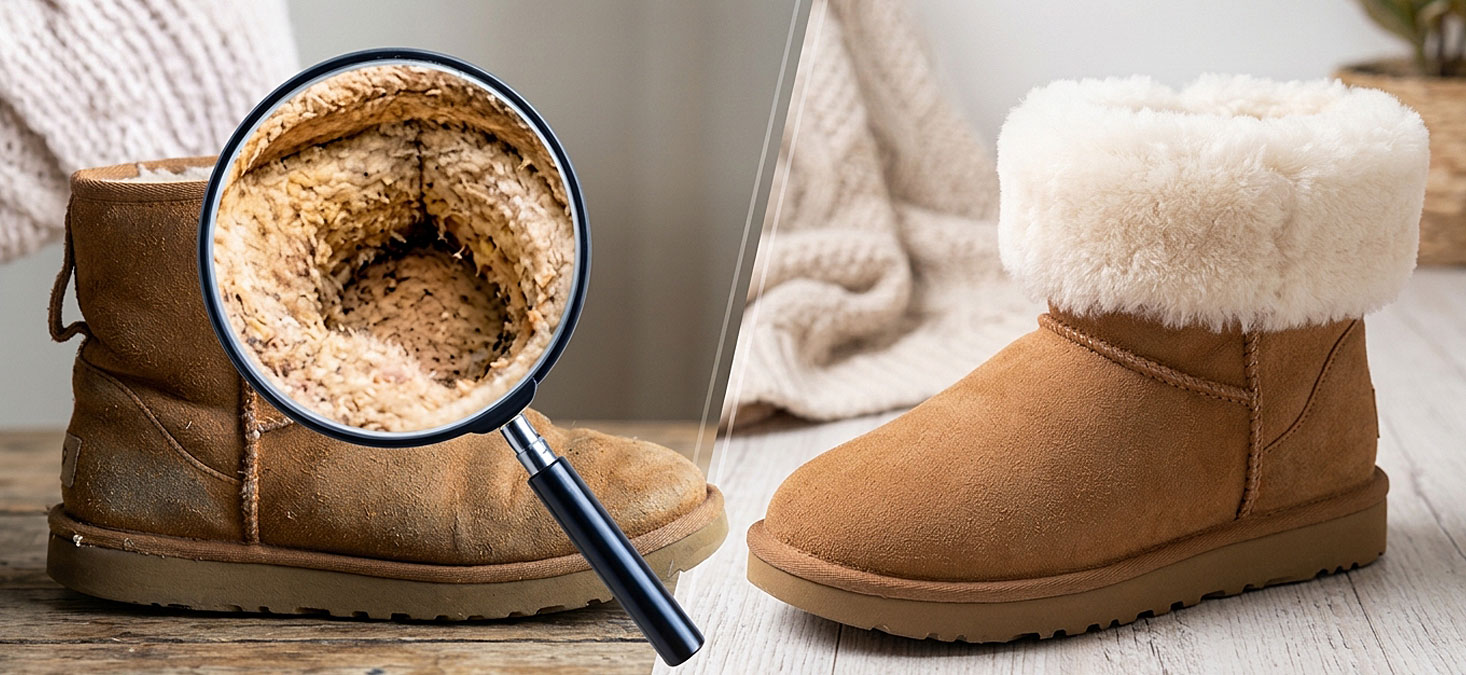
Thinking about buying second-hand Ugg boots? The attractive prices on online marketplaces can make pre-owned pairs look like a great bargain. But before you press "buy," there are a few important things worth considering.
Ugg boots are very different from ordinary second-hand clothing. They are designed to be worn barefoot, with natural sheepskin sitting directly against your skin. Over time, that inner wool lining adapts specifically to the original wearer's feet, absorbs moisture, and experiences natural wear and tear.
So, while a second-hand pair might look perfectly fine in photographs, what is actually happening inside the boots?
From an unfamiliar fit and worn-out sheepskin to hidden hygiene concerns and fungal risks, here are six reasons to think twice before buying pre-owned Ugg boots.
A Fit That Belongs to Someone Else
Have you ever wondered why a new pair of genuine sheepskin Ugg boots feels completely different after a few weeks of wear?
That’s because natural wool gradually softens and compresses, permanently adapting to the unique shape of your feet. The footbed and lining develop wear patterns that reflect the original owner's foot shape, pressure points, and walking habits.
When you buy second-hand boots, you are effectively stepping into footwear that has already been broken in by someone else.
What should you look out for?:
- An unfamiliar fit: The lining and footbed may already have adapted to another person's feet.
- Uneven compression: Some areas may be more flattened than others, affecting how the boots feel when you walk.
- Heel movement: Previously stretched or worn areas may result in a looser fit.
- Reduced cushioning: The footbed may no longer provide the original softness and comfort.
A second-hand pair might still be wearable, but it will never offer the custom comfort of a new pair that adapts exclusively to your feet.
The Hygiene Factor: Someone Else's Sweat and Skin Residue
Would you wear a stranger's house slippers every day without knowing how they had been used? Ugg boots deserve the exact same consideration.
Because they are commonly worn without socks, the natural wool lining sits directly against bare skin. During everyday wear, feet naturally produce perspiration and shed dead skin cells. Over time, these organic micro-particles accumulate deep inside the footbed, heel, and toe area.
With a second-hand pair, there are critical things you simply cannot know:
- How frequently the previous owner wore them.
- Whether they wore them barefoot or with socks.
- Whether they had excessive foot perspiration.
- Whether the boots were dried properly between uses.
- How they were cleaned and maintained.
Even if the outer suede looks immaculate, the internal lining carries an unknown hygiene history that is impossible to fully inspect.
The Risk of Fungal Infection and Reinfection
This is perhaps the most compelling reason to think twice about buying second-hand Ugg boots.
If you’ve ever experienced athlete's foot (tinea pedis) or a fungal nail infection, you know how persistent and frustrating they are to treat. The microscopic fungi responsible for these conditions thrive in warm, moist environments and can survive inside footwear linings for extended periods—even when the shoes aren't being worn.
Why does this matter so much with sheepskin?
- Direct skin contact: The dense wool lining sits directly against exposed skin without the protective barrier of a sock.
- Trapped moisture: Wool naturally retains body heat and moisture, creating an ideal environment for dormant spores to reactivate.
- Inaccessible fleece: High-density wool makes it nearly impossible to visually inspect or reach embedded spores.
- Reinfection cycles: Wearing contaminated footwear can trigger a recurring infection long after your skin has healed.
You cannot determine a seller's foot-health history just by looking at a photo. If you want to avoid foot infections, stepping into pre-owned footwear is an unnecessary risk.
Can You Really Disinfect Second-Hand Sheepskin?
You might think: "Can’t I just disinfect them before wearing them?"
It’s a logical question. There are over-the-counter products available—such as antifungal shoe sprays or UV shoe sanitizers—designed to help reduce bacteria inside standard footwear.
However, genuine sheepskin presents a unique challenge:
- Deep Fleece Penetration: Thick, densely packed wool makes it difficult for sprays or UV light to penetrate all the way down to the leather backing where microorganisms hide.
- Delicate Natural Materials: Genuine sheepskin combines soft leather with a wool fleece lining. Standard deep-cleaning methods ruin both materials:
- Boiling water & high heat: Shrinks leather, hardens hide, and ruins the wool's texture.
- Bleach & harsh chemicals: Strip natural oils, dissolve wool fibers, and cause severe discoloration.
- Excessive soaking: Destroys the boot’s structure, leaving it stiff and misshapen once dry.
Gentle surface cleaning cannot guarantee deep sterilization, and aggressive cleaning destroys the boots.
Worn-Out Wool: Where Has the Cushioning Gone?
If you look closely inside a heavily worn pair of Ugg boots, you might be surprised by what you find.
While genuine sheepskin is remarkably durable, the inner fleece is not immune to friction. Repeated rubbing gradually flattens the fibers, particularly in high-impact zones like the heel counter and the ball of the foot. Over time, the wool thins out or wears away completely, leaving patches of exposed leather.
Why does this matter?
- Loss of cushioning: Flattened or missing wool removes the soft padding underfoot.
- Friction & blisters: Thin patches expose bare leather backing and rough inner stitching, causing painful friction rub.
- Lost insulation: Compressed wool loses its loft, reducing the natural temperature regulation that keeps your feet warm in winter and breathable in mild weather.
Brushing or cleaning second-hand boots cannot restore wool fibers that have physically worn away.
What You See Isn't Always What You Get
Buying second-hand footwear online comes with another practical hurdle: photos rarely tell the whole story. A pair of boots might look great in a curated listing photo, but online photos easily mask structural defects:
- Uneven sole wear: Outer soles worn down on one side force your feet into unnatural angles when walking.
- Stretched leather: Over-expanded ankles and calves lead to a sloppy fit and zero support.
- Weakened stitching: Seams near the heel or sole may be on the verge of tearing.
- Uncertain origin: A second-hand listing may not provide reliable information about the materials or country of manufacture
Even if the seller describes the boots as being in excellent condition, you are relying on their assessment rather than knowing the product's complete history.
The Bottom Line: Are Second-Hand Ugg Boots Really Worth the Risk?
A cheap price tag on a second-hand pair might look like a deal on paper, but consider what you're actually paying for. You are buying footwear that has already adapted to someone else's feet, has compressed cushioning, an unknown hygiene history, and potential structural wear.
None of this means every second-hand pair is unusable, but for footwear designed to sit intimately against bare skin, buying new is always the safer, cleaner, and more comfortable choice.
Smart Saver Tip: If budget is your primary concern, look out for seasonal clearance sales, end-of-line stock, or holiday promotions from reputable retailers. You can save money while still enjoying a brand-new pair of boots with fresh, pristine sheepskin made exclusively for your feet.
Your feet deserve their own pair!


